—   The Rest on Spotify

Spring Special

Spring Special

Everything is blooming and so does The Rest. To celebrate, we are offering our annual subscription with a 25% discount. As a paying subscriber you get:

  • A handpicked song delivered to your inbox every weekday (smartlink to music platforms)
  • A “Wow, I didn't know that!” background story
  • Full access to the complete archive
  • Full access to the comments section incl. inputs from the community
  • An ad-free experience across all channels of The Rest

The Rest presents a song and an insightful story about it every weekday.

You can enjoy the song on your preferred streaming platform while the story will give you something to ponder and discuss with your family, friends and colleagues.

Learn more about The Rest here.
Nnavy Blue Is Our Color of the Day

Nnavy Blue Is Our Color of the Day

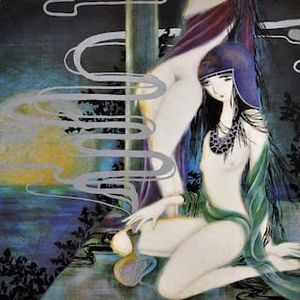
Few colors have experienced such shifting significance in Western art history as blue. In antiquity, blue played only a minor role, as it was simply difficult to produce. In the Middle Ages, with the discovery of ultramarine extracted from lapis lazuli, blue gained new value. The precious pigment, at times more expensive than gold, was reserved for the robes of the Virgin Mary. This fundamentally changed its symbolism: blue became the color of heaven, of fidelity and of spiritual purity.

The development of synthetic pigments in the 18th and 19th centuries, such as Prussian blue and cobalt blue, finally made the color more accessible. Artists could use it freely, independent of religious constraints: the new era of blue had begun. In Caspar David Friedrich’s work, it figures as the vastness and infinity of nature; in van Gogh’s, it represents emotional intensity. In Picasso’s famous “Blue Period,” it became a means to express psychological states like melancholy, solitude, reflection.

It goes on and on: Expressionists, especially the circle around Der Blaue Reiter, understood blue as a spiritual color. Vasily Kandinsky saw it as an expression of inner, spiritual states and used it to create compositions that lifted the viewer to an immaterial plane. In the 20th century, Yves Klein pushed this idea further: with his International Klein Blue (IKB), he created monochrome works where blue was no longer just a color, but an experience. Klein described it as an “open window to freedom,” lifting the viewer beyond the physical world.

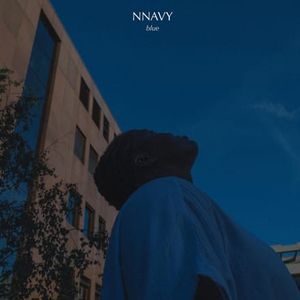
Which brings us directly to our song of the day, “Blue” by Swiss singer NNAVY, where this promise of freedom and escape slips into sound. Soulful vocals meet a reduced piano, giving each lyric room to breathe. The track feels at once familiar and introspective; it is a space of its own, acoustically shaped, fleeting and elusive, just as the sky and the sea.

Listen


Dig Deeper

Derek Jarman’s 1993 film Blue is a profound and experimental meditation on life, death and identity, serving as his final cinematic testament before his passing from AIDS-related illness. The film unfolds over 79 minutes of a single, unchanging blue screen accompanied by a rich auditory landscape. This includes narrations by Jarman himself, Tilda Swinton, Nigel Terry and John Quentin, alongside a score by Simon Fisher Turner, featuring contributions from artists like Brian Eno and Coil.

The film intertwines two narrative threads. One explores Jarman’s personal experience as a gay man grappling with the physical and emotional toll of AIDS in 1990s London. His deteriorating vision, reduced to perceiving only shades of blue, profoundly influenced the film's aesthetic and thematic direction. At the same time, the film personifies the color blue, depicting its adventures and interactions with other colors. The closing moments are poignant, listing the names of friends and lovers lost to AIDS, underscoring the personal and collective grief experienced during the epidemic.

Often shown at art cinema screenings, you can also find it on the streaming platform Salzgeber Club. It truly is a one-of-a-kind experience.


Adding to Your Listening Pleasure This Week:


From After the Album that Never Existed

From After the Album that Never Existed

In August 2021, US synth-pop outfit Chromatics announced their disbandment, much to their  fans’ puzzlement. The statement came from Ruth Radelet, Adam Miller and Nat Walker, noticeably omitting longtime producer Johnny Jewel, whose Italians Do It Better label had long been the band’s creative home. His absence deepened the sense of mystery surrounding the group’s final chapter, fitting for a band long steeped in enigma and ambiguity.

Formed in 2001 as Adam Miller’s punk-leaning project, Chromatics evolved dramatically over the course of the 2000s. With Radelet’s icy, intimate vocals, Walker’s sleek rhythms and Jewel’s widescreen production, the band shifted toward moody synth-pop, weaving together elements of disco, noir and minimal wave. Their music often felt suspended between worlds—romantic yet detached, warm yet ghostly—earning them a reputation as masters of atmosphere.

In the 2010s, the band pulled off a coup with Dear Tommy, an “album” straddling the boundary between reality and myth. Never officially released, the LP stands as one of modern music’s most enigmatic and elusive projects. First announced in 2014 as the follow-up to their 2012 album Kill for Love, it was initially scheduled for an early 2015 release. However, it was repeatedly delayed, and in 2017 the narrative took a dramatic turn when Johnny Jewel revealed that he had destroyed all existing copies following a near-death experience. Yet questions about the album’s existence persisted. Reports suggest that physical copies may never have been manufactured at all, casting doubt on whether Dear Tommy ever truly existed. But this uncertainty only heightened the album’s mythic status, leaving fans to wonder if the project was more of a conceptual art piece than an actual record.

With Dear Tommy never seeing the light of day—and the 2017 LP Cherry being essentially a deluxe version of the previously released EP of the same name—2019’s Closer to Grey became the band’s first full-length in seven years. And it remains their final original album, as 2020’s Faded Now largely consists of alternate versions of the songs on Closer to Grey.

Released with almost no warning, their opus ultimum showcased both the group’s unpredictability and their enduring mastery of mood. Among Closer to Grey‘s highlights, “Light as a Feather” stands out: a hypnotic track driven by Radelet’s spectral vocals and a pulse that is at once haunting and seductive. It captures the essence of what made Chromatics so singular: music that whispers from a liminal space, as if heard through the static of a dream.

Listen


Dig Deeper

Also shrouded in enigma is the British band The KLF—and there’s plenty to say about this notorious duo. For one thing, the band was remarkably uncompromising when it came to realizing their wild ideas. For another, The KLF was among the most successful acts of its time, becoming the world’s highest-selling singles act in 1991…

In the equally entertaining and thought-provoking book The KLF: Chaos, Magic and the Band Who Burned a Million Pounds, John Higgs recounts a wealth of stories about the band while skillfully connecting them to a larger cultural and philosophical context. Best of all, you don’t have to be a fan of The KLF to enjoy the book.

“Utterly irresistible and totally brilliant” – The Quietus

“The best non-fiction book I've ever read. It's magical. Stunning” – Dan Schreiber, No Such Thing As a Fish

Shop here


Adding to Your Listening Pleasure This Week:


Six Names You Must Know

Six Names You Must Know

Today’s song—“Lift You” by Moin—features a poignant spoken-word piece titled “To Read to Be in a Time of War out Loud”, written by Sophia Al-Maria. It was inspired by her live reading of Etel Adnan’s “To Be in a Time of War” during a performance by Tosh Basco in New York in May 2023.

Two sentences into today’s newsletter, and we’ve already mentioned quite a few names—many, if not all of which may be unfamiliar. Yet each is highly relevant in our eyes. So, in this edition of our newsletter, we thought we’d simply introduce them one by one, moving from the end of the list to the beginning. If anyone catches your attention, we encourage you to dig deeper into their work. We’re adding links (and providing further connections in the section below), so you can dive in straight away.

Tosh Basco (b. 1988) is an American artist whose practice spans performance, photography and drawing. Basco is best known for her former persona, boychild. A nonbinary and transgender artist, Basco explores fluid identities through her work. A longtime collaborator of award-winning filmmaker and artist Wu Tsang, she co-founded the collective Moved by the Motion and was part of Schauspielhaus Zurich’s ensemble.

Etel Adnan (1925–2021) was a Lebanese-American poet, essayist and painter. Born in Beirut, she studied philosophy in Paris and the U.S. before teaching in California. Though acclaimed as a writer—in 1977 she received the Amitié Franco-Arabe Prize for her novel Sitt Marie Rose—Adnan only gained global recognition in her eighties for her vivid abstract paintings. With a Syrian Muslim father and a Greek Christian mother, she grew up between cultures and languages, speaking Arabic, Greek and French, and later writing primarily in French and English.

Sophia Al-Maria (b. 1983) is a Qatari-American artist, writer and filmmaker. Raised between Qatar and the U.S., she coined the term “Gulf Futurism” to describe the region’s rapid development and cultural shifts. Her 2012 memoir The Girl Who Fell to Earth explores her bicultural identity. Her visual work—shown at Tate Britain, the Whitney and the Venice Biennale—fuses sci-fi, myth and critique. She also created the 2020 Sky series Little Birds.

Moin is a London-based experimental trio formed by Joe Andrews and Tom Halstead (also known as the duo Raime), joined by percussionist Valentina Magaletti in 2021. Their sound merges intense post‑punk and noise textures with layered electronic vocal samples and guitars as well as Magaletti’s dynamic, asymmetrical drumming. Moin’s 2024 album, You Never End, introduced guest vocalists—including james k, Coby Sey and Al-Maria—marking a shift toward a warmer, more intimate sound that nonetheless remains heavy and, at times, cathartic.

Listen


Adding to Your Listening Pleasure This Week:


Subscribe