
A.CHAL Chologante (2026)
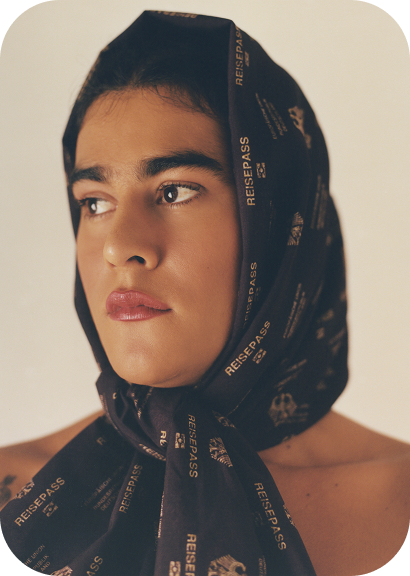
Naya de Souza’s work begins with movement. Not only across disciplines, but across languages, geographies and ways of belonging. Born in 1991 in Brazil’s Caatinga region and raised between Bahia and Pernambuco, she understands identity not as something fixed, but as a continuous process of translation.
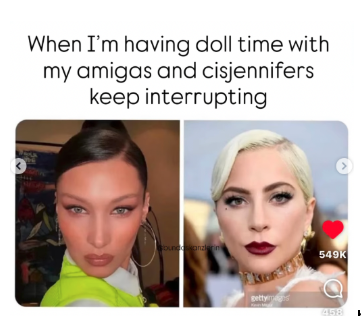
Working through different alter egos, including Lux Venérea and @bundaskanzlerin, Naya moves effortlessly between performance art, comedy, social critique, education and cooking. Her practice often occupies the spaces in between, like a constant negotiation between places, cultures and systems of power.
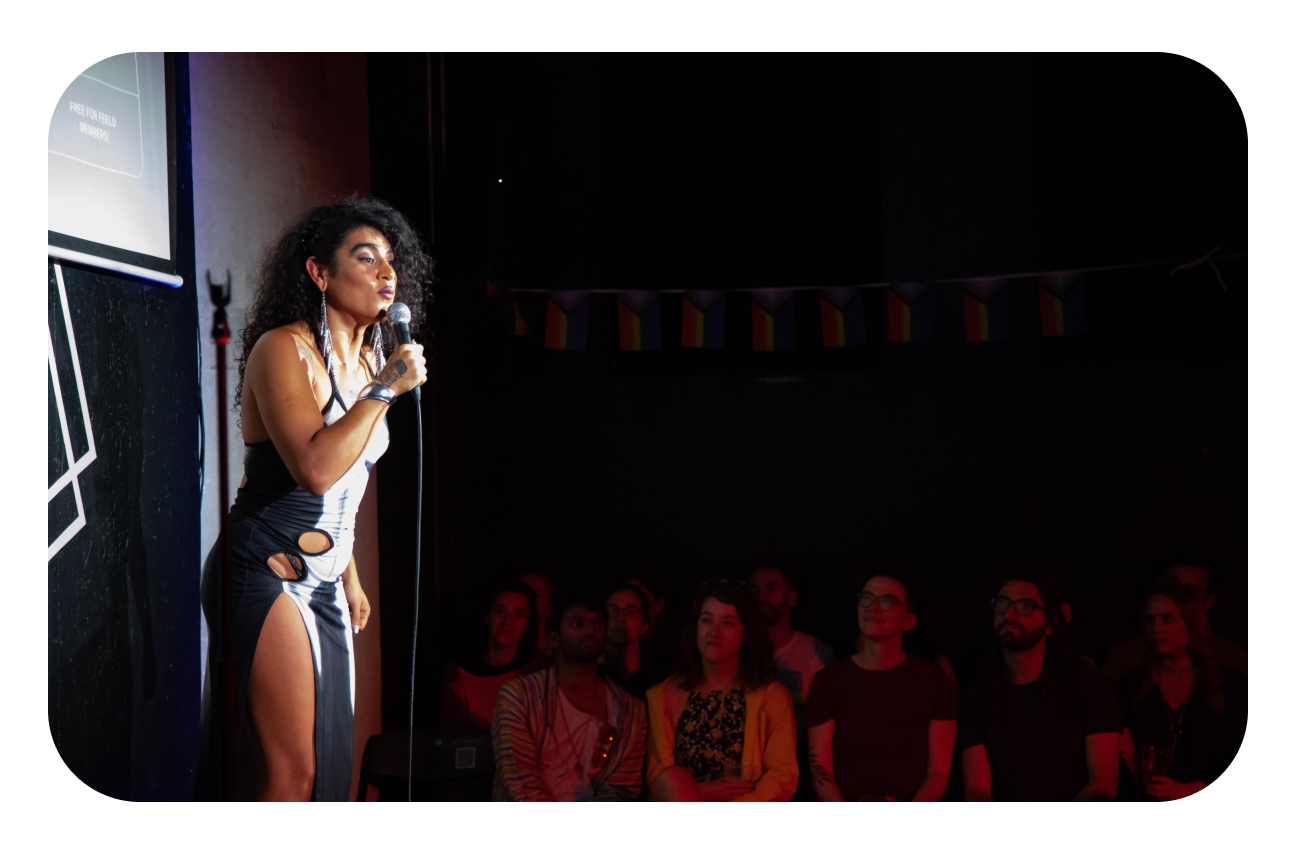
Since moving to Berlin in 2016, she has become one of the city’s most distinctive cultural voices. Whether through multimedia cabaret performances, politically charged stand-up sets or her sharp Social Media interventions as Bundaskanzlerin, Naya examines questions of exclusion, (German) bureaucracy, belonging and representation with both humor and precision. Using found footage, memes, video collages and performance, she has developed a visual language that challenges dominant narratives while making complex political realities accessible to broader audiences.
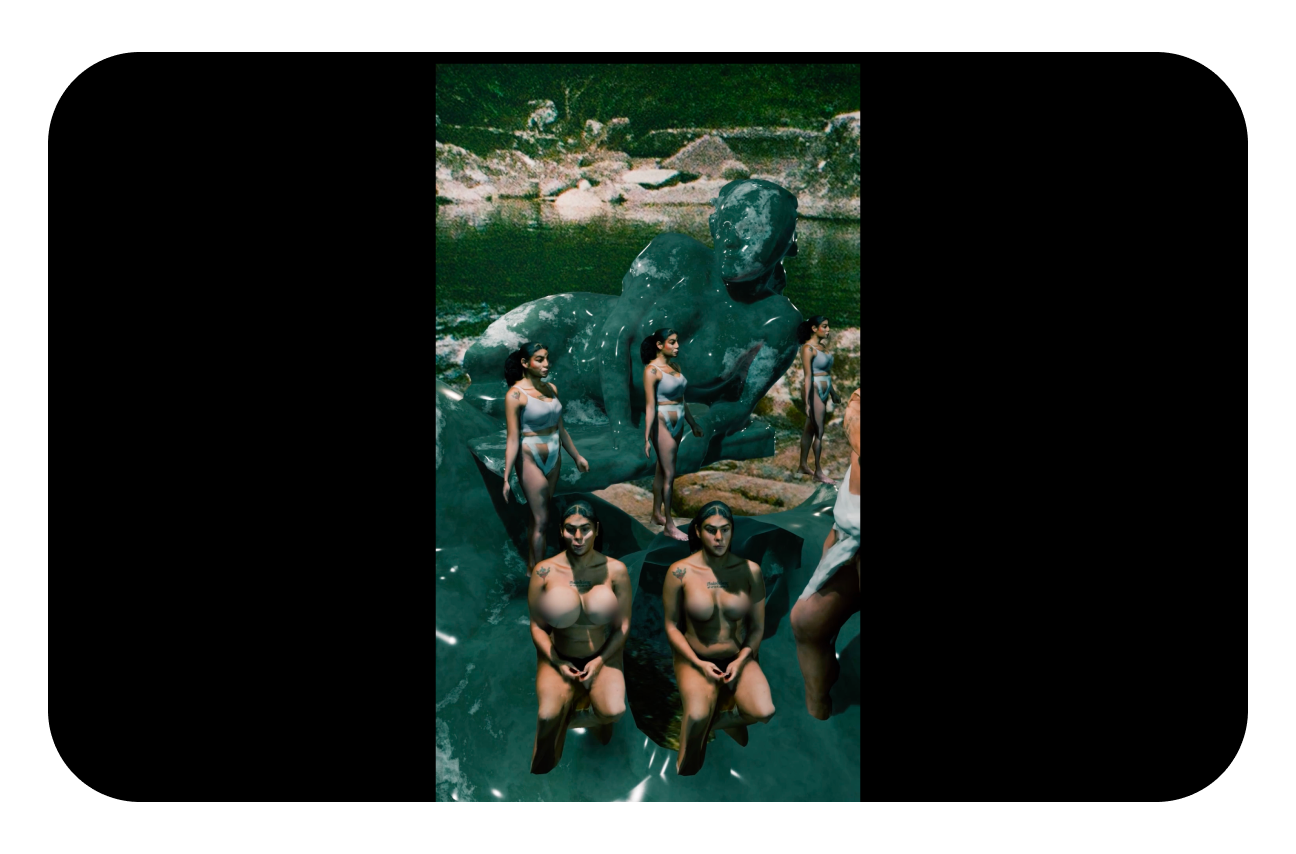
Her work has been presented internationally at institutions including Haus der Kulturen der Welt, Hebbel am Ufer, Kampnagel, Martin-Gropius-Bau, Gorki Theater, Deichtorhallen Hamburg and CCBA Barcelona, among many others. Alongside her artistic practice, she is also an educator, HIV rights activist and trained chef, approaching food, teaching and community-building as interconnected forms of cultural work.
When we asked Naya for a track, she chose “Chologante” by Peruvian-American singer and rapper A.CHAL. The song, she explains, touched her soul because it speaks about territory and freedom from a place that only a few people are able to name. After years outside Brazil, she often feels suspended between proximity and distance.
In her words: “Being abroad makes me feel like I am carrying my land/earth in my feet. I feel distant, yet I am one of those whose language and accent have never changed. I still look and sound like home, even though I have lived almost half my life abroad, and sometimes I feel unbearably gringa. The way I walk, the way I sound, the way I eat and dance takes the form of a virtual territory of their own, visible to other people, it surrounds me, and his music, together with its aesthetic, carries me back there.”
Start the conversation
Become a paid member of The Rest to gain access to the comments section.